THE APPExchy does the money maths for you, at the counter.
A currency converter with no ads, built for travel. Type the rate from the exchange board and see what the booth keeps. Check the ATM fee before you insert the card.
- No ads. Not now, not later.
- ATM fees and limits for 35 countries
- Booth check: what the exchange office really keeps
- Works offline with the last saved rates
 App Store · soon
Free. Pro is one payment of $3.99, or free when three friends join.
What is Costa Rica's currency, and what do the bills and coins look like?
Costa Rica's money is the colón. It is written with the sign ₡ and the bank code CRC4.
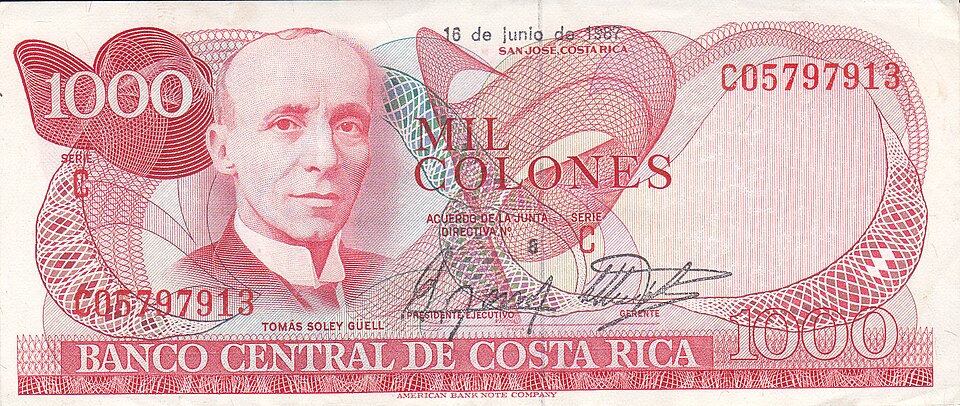
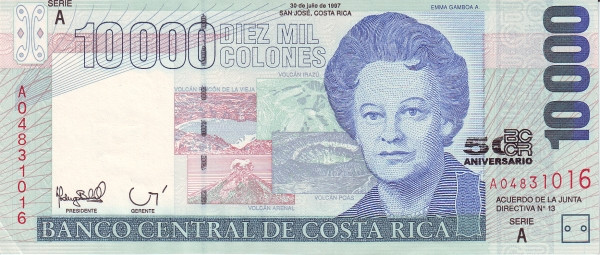
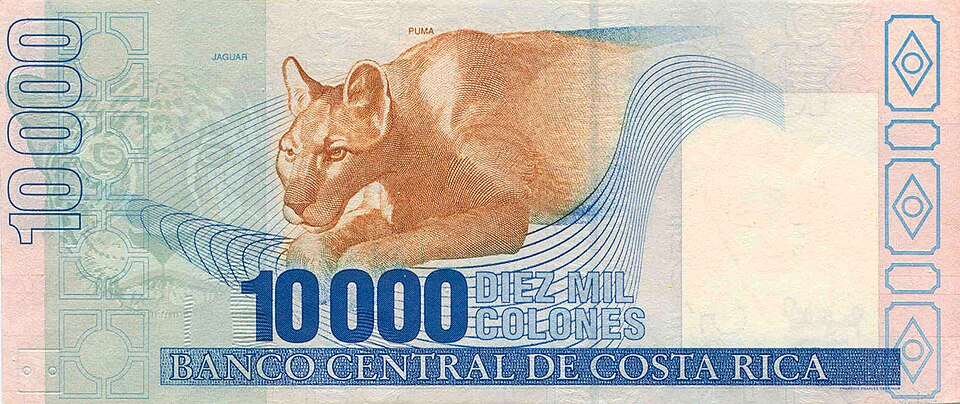
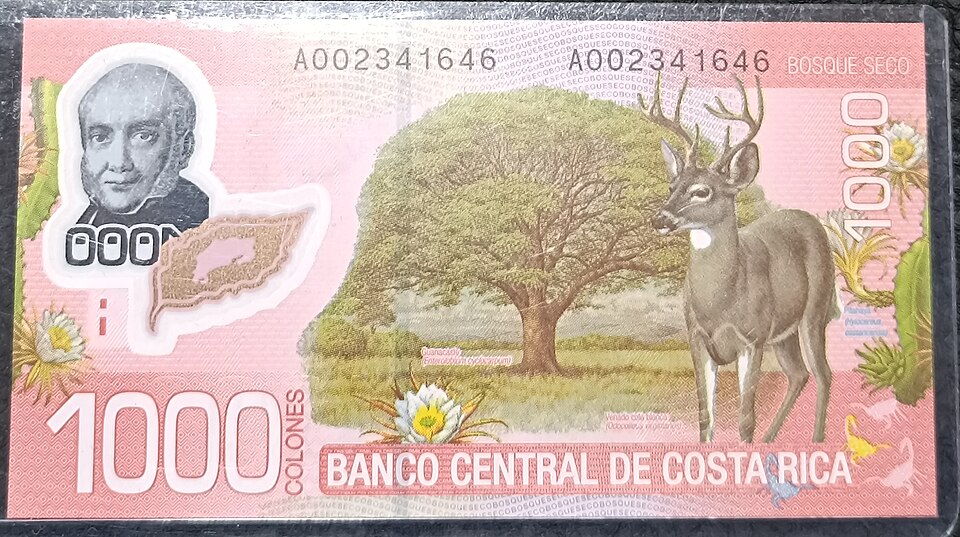
Banknotes come in five values: 1,000, 2,000, 5,000, 10,000 and 20,000 colones5. They are made of plastic, not paper. As of 2021, the central bank said this makes them last longer, stay secure and recycle fully9. As of 2021, each note also had a see-through window and a band that changes colour when you tilt it8. Every value has its own colour and its own animal. The 10,000 colón note shows a sloth8.
Coins come in five current values: 500, 100, 50, 25 and 10 colones6. Older round coins worth 5, 10 and 25 colones, from an earlier design, stopped working as payment on 1 July 20267. You can still take old coins to a bank and trade them for valid money7.
Should you pay with cash or a card?
Match your payment to the price tag. Tours, hotels, restaurant bills and long taxi rides are often priced in US dollars, so pay those in dollars. Short rides and small shops price in colones, so pay those in colones12.
Carry a card that charges no foreign fee. Use it for the dollar prices, and pull colones from an ATM for the rest12.
Where can you get colones, and what does it cost?
ATMs are the easiest way to get colones. Some bank machines charge foreign cards nothing, while others charge $4 to $9 for each withdrawal, on top of any fee your home bank adds13.
Most ATMs hand out colones. A few bank machines also hand out US dollars15. Each withdrawal is capped somewhere between 100,000 and 500,000 colones, and most travelers hit a daily wall of about $1,50014.
If the screen asks to charge you in US dollars instead of colones, say no and pick colones. That on the spot swap adds its own fee15.
Short answers
What currency does Costa Rica use?
Costa Rica uses the colón, code CRC4. One US dollar buys about 455.58 colones right now1.
Can I pay with US dollars in Costa Rica?
Yes. Dollars are accepted almost everywhere, including ATMs, taxis, hotels and restaurants, and the government prices some fees in dollars too10.
Can I pay with euros in Costa Rica?
No. Shops do not accept euros11.
How much does an ATM withdrawal cost in Costa Rica?
Most machines charge $4 to $9 a withdrawal, though two of the largest local banks charge foreign cards nothing13. Each withdrawal is capped between 100,000 and 500,000 colones14.
How much cash can I bring into Costa Rica?
You must declare cash and similar instruments worth $10,000 or more at the border16.
Can I still use the old 5, 10 and 25 colón coins?
Not to pay. The old design stopped working as payment on 1 July 2026, though banks still exchange them for valid money7.
Exchy does this on your phone.
ATM fees for the country you land in, a booth check and a converter with no ads. Ever.
App Store · soonFree. Pro is one payment of $3.99, or free when three friends join.