Should You Pay in Local Currency or Home Currency Abroad?
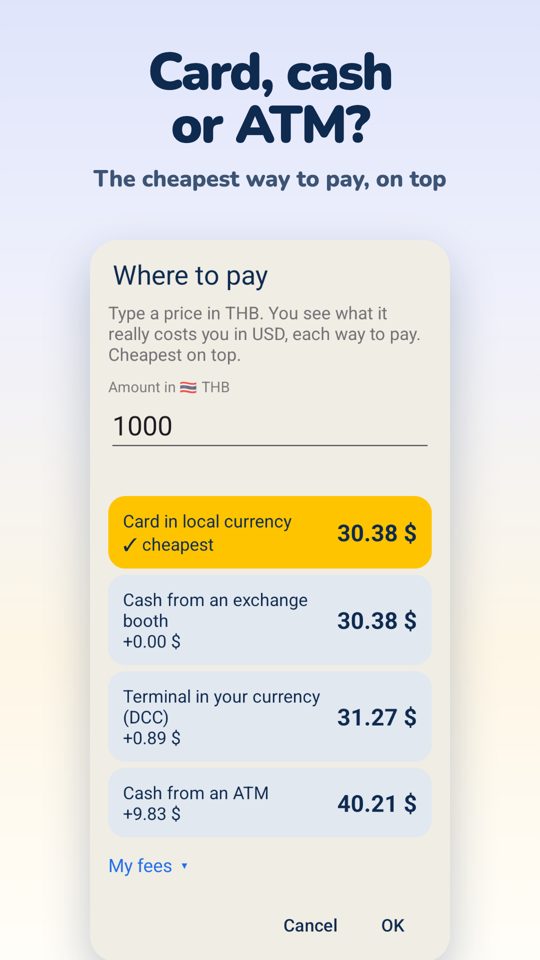
Always choose the local currency at ATMs and card machines abroad. Paying in your home currency triggers dynamic currency conversion, a markup set by the merchant, not your bank4. Studies found travelers pay more in 99.7% of cases, with an average extra cost of 7%5.
Updated 2026-10-23. Numbers carry a small link to their source. Fees and rules change, check the screen or the form before you pay.
THE APP
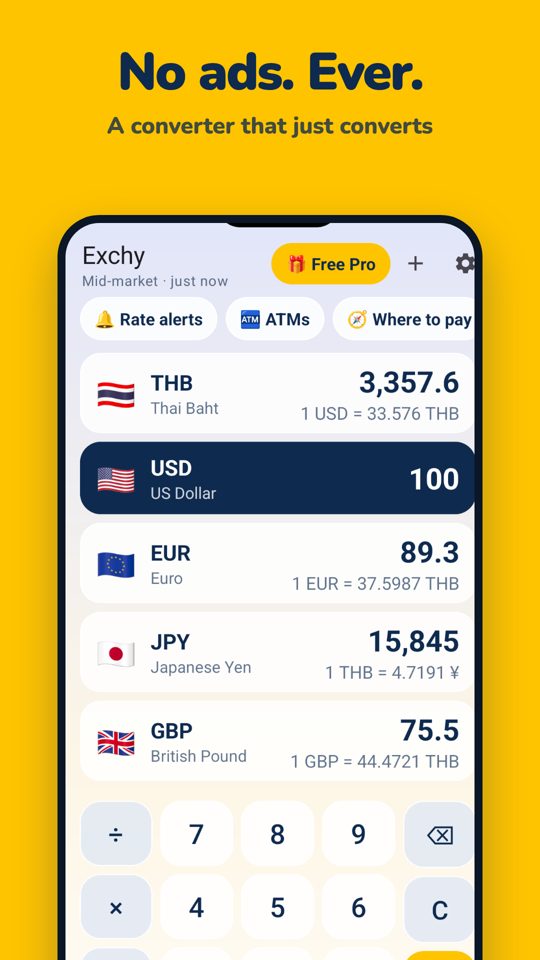
Exchy does the money maths for you, at the counter.
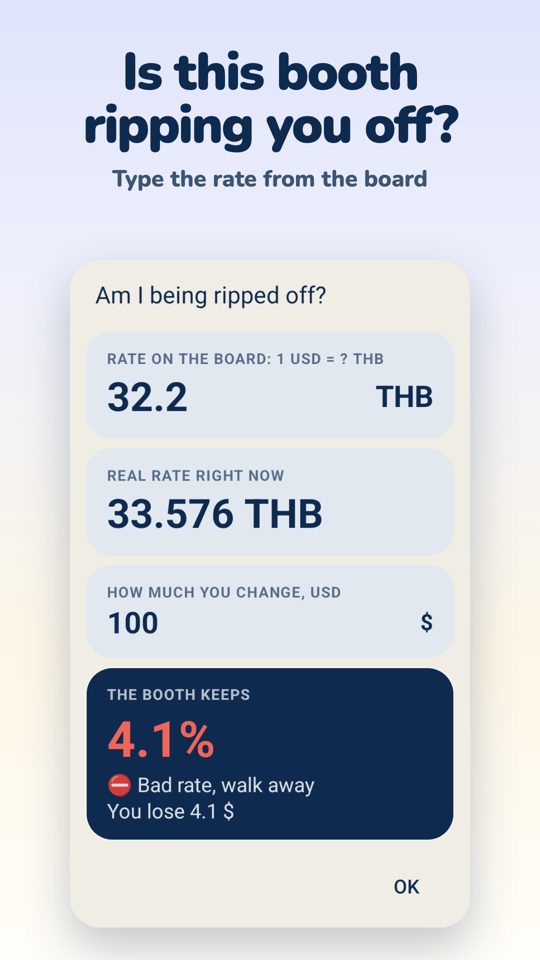
A currency converter with no ads, built for travel. Type the rate from the exchange board and see what the booth keeps. Check the ATM fee before you insert the card.
No ads. Not now, not later.
ATM fees and limits for 35 countries
Booth check: what the exchange office really keeps
Free. Pro is one payment of $3.99, or free when three friends join.
What is dynamic currency conversion?
Dynamic currency conversion, or DCC, happens when an ATM or card machine asks you to pay in your home currency instead of the local one. A separate company handles the conversion, not your bank. That company works with Visa, Mastercard, and UnionPay to process the payment13.
The machine shows you a choice right at the moment of payment, home currency or local currency14.
Why DCC costs more
The company doing the conversion adds its own markup, usually 3% to 6% above the real bank rate4. Studies found that travelers pay more in 99.7% of cases, at an average of 7% extra5. In Britain alone, DCC costs travelers more than £300 million a year6.
One study found a gap of 13.7 percentage points between paying in euros and paying in Czech koruna at a single ATM7. That one choice can be the biggest fee on your whole trip.
The fee sits on top of card network costs
Visa and Mastercard already charge their own small fee for converting currency, about 1.0% each1011. DCC markup sits on top of that fee, set by a separate company, not the card network4.
Your rights when a machine offers DCC
EU law requires the machine to show you the exchange rate and any charges before you pay8. Regulators said these rules were not clear enough and asked banking regulators to make the disclosure stronger9. The rate shown must be based on a real wholesale bank rate, with any markup shown separately12.
Consumer groups asked the EU to make both prices, home currency and local currency, sit side by side on the screen15. A European Parliament committee even proposed letting people block DCC on their card completely16.
What to do at the machine
When the screen asks you to choose a currency, pick the local one every time. This skips the extra markup and leaves the conversion to your own bank or card network, which charges less1011.
Short answers
Should I pay in local currency or home currency abroad?
Always pick local currency. Studies found DCC costs more in 99.7% of cases, by an average of 7%5.
What is a DCC fee?
It is a markup added when you choose to pay in your home currency abroad, usually 3% to 6% above the real bank rate4.
Why does the ATM ask to convert currency?
A separate company runs this service through Visa, Mastercard, and UnionPay, and offers you the choice right at the point of payment1314.
Is DCC legal?
Yes. EU law requires the machine to disclose the rate and charges before you pay8, though regulators have asked for stronger rules9.
Can paying in local currency still cost more?
Sometimes, if your own bank adds a high fee, but one study found a gap as high as 13.7 percentage points when home currency was chosen instead7.
The short version
Always choose local currency at ATMs and card machines abroad.